The Death of Prompt Engineering: How to Build Autonomous AI Agent Networks
Prompt engineering was just a bridge. The future belongs to decentralized, event-driven networks of autonomous AI agents. Here is how to design and build them.
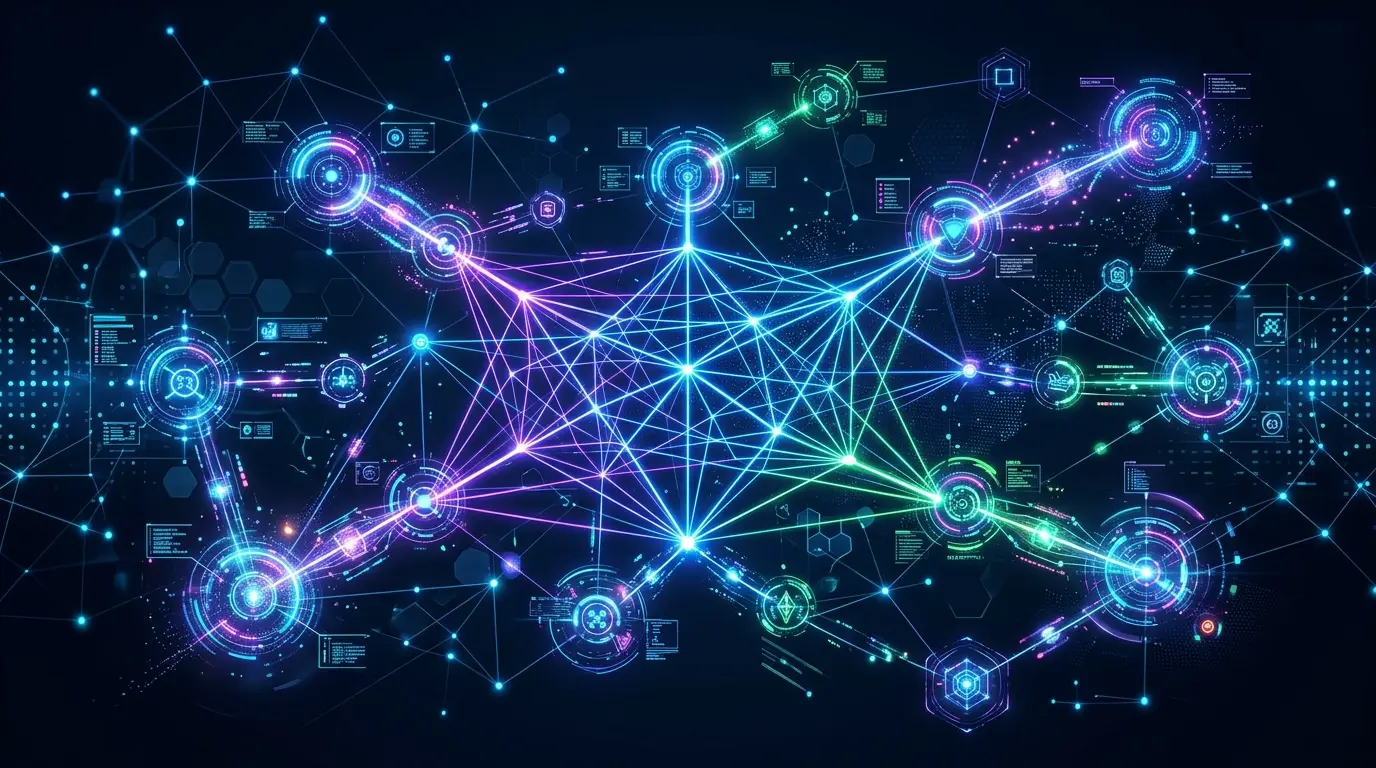
In the early days of the generative AI boom, a new job title took the tech industry by storm: Prompt Engineer. Teams of developers and hobbyists spent hours tweaking adjectives, appending "think step-by-step", or threatening LLMs with hypothetical fines to squeeze out better performance.
But prompt engineering was always a transitional phase. It was a bridge between the era of static APIs and the era of truly Autonomous AI Agent Networks.
Today, we are witnessing a paradigm shift. We are moving away from monolithic, single-prompt instructions toward decentralized networks of specialized agents that communicate, negotiate, and collaborate to solve complex, multi-step problems.
In this post, we’ll explore why prompt engineering is dying, the architecture of autonomous agent networks, and how you can build a lightweight, event-driven agent network in Python from scratch.
Why Prompt Engineering is Fragile and Inefficient
Prompt engineering has several fundamental flaws:
- Model Lock-in: A highly engineered prompt that works perfectly on Claude 3.5 Sonnet might completely fail or hallucinate on GPT-4o or Gemini 1.5 Pro.
- Linear Context Scaling: Forcing a single model instance to handle planning, research, coding, and quality assurance leads to context dilution, attention drop-off, and high latency.
- Lack of Dynamic Orchestration: Complex software engineering tasks aren’t solved in a single prompt; they require iterative loops of executing, testing, and debugging.
Instead of writing a 1,000-line prompt trying to make a single LLM wear five different hats, the modern approach is to build networks of simple, specialized agents. Each agent has one job, access to specific tools, and a local context window.
Architecture of an Agent Network
An autonomous agent network is composed of three core entities:
- Agent Nodes: Individual LLM instances wrapped in a control loop. Each node has a persona, localized system instructions, and a set of tools (APIs, filesystem access, sandboxed runtimes).
- The Message Broker / Router: The communication layer. Agents do not talk to each other directly in an ad-hoc manner; they publish events and send structured messages via a router or queue.
- State Management: The shared memory. This can be episodic (individual agent history) or global (a shared workspace or key-value store containing the progress of the overall goal).
Topologies of Cooperation
Depending on the task, you can arrange your network in different topologies:
- Hierarchical (Orchestrator-Worker): A central coordinator receives the user input, breaks it down into sub-tasks, dispatches them to specialized worker agents, and compiles the final result.
- Chains / Pipelines: A linear sequence where Agent A’s output becomes Agent B’s input (e.g., Researcher -> Writer -> Editor).
- Peer-to-Peer / Collaborative: Agents subscribe to topics and self-delegate tasks, debating and voting on solutions.
Let’s visualize a typical Hierarchical & Collaborative topology:
graph TD
    User([User Prompt]) --> Orchestrator[Orchestrator Agent]

    Orchestrator -->|Dispatch Subtask| ResearchAgent[Research Agent]
    Orchestrator -->|Dispatch Subtask| CoderAgent[Coder Agent]

    ResearchAgent -->|Use Tool| SearchAPI[Search API]
    SearchAPI -->|Results| ResearchAgent

    CoderAgent -->|Submit Code| ExecutorAgent[Code Executor]
    ExecutorAgent -->|Stdout / Errors| CoderAgent

    ResearchAgent -->|Publish Findings| Orchestrator
    CoderAgent -->|Publish Code| Orchestrator

    Orchestrator -->|Compile Report| User
Building a Lightweight Agent Network in Python
Let’s build a functional, event-driven agent network. We will create:
- A
Messageclass representing communication. - An
AgentNodebase class. - An
AgentNetworkbroker. - Two specialized agents: a Researcher and a Synthesizer cooperating to answer a query.
1. Defining the Message and Network Broker
The broker will route messages between agents using a simple pub-sub pattern.
1
2
3
4
5
6
7
8
9
10
11
12
13
14
15
16
17
18
19
20
21
22
23
24
25
26
27
28
29
30
31
32
33
34
35
36
37

import asyncio
from typing import Dict, List, Callable, Any
from dataclasses import dataclass, field

@dataclass
class Message:
    sender: str
    recipient: str
    topic: str
    content: Any
    metadata: dict = field(default_factory=dict)

class AgentNetwork:
    def __init__(self):
        self.agents: Dict[str, Any] = {}
        self.subscriptions: Dict[str, List[Callable]] = {}

    def register_agent(self, agent_name: str, agent: Any):
        self.agents[agent_name] = agent
        print(f"[Network] Registered Agent: {agent_name}")

    def subscribe(self, topic: str, callback: Callable):
        if topic not in self.subscriptions:
            self.subscriptions[topic] = []
        self.subscriptions[topic].append(callback)

    async def publish(self, message: Message):
        print(f"[Network] Broadcast: {message.sender} -> {message.recipient} on '{message.topic}'")

        # 1. Direct routing
        if message.recipient in self.agents:
            asyncio.create_task(self.agents[message.recipient].receive(message))

        # 2. Topic subscriptions
        if message.topic in self.subscriptions:
            for callback in self.subscriptions[message.topic]:
                asyncio.create_task(callback(message))
2. Implementing the Base Agent Node
Each agent runs its own asynchronous processing loop.
1
2
3
4
5
6
7
8
9
10
11
12
13
14
15
16
17
18
19
20
21
22
23

class AgentNode:
    def __init__(self, name: str, network: AgentNetwork):
        self.name = name
        self.network = network
        self.inbox = asyncio.Queue()
        self.network.register_agent(name, self)
        asyncio.create_task(self.run())

    async def receive(self, message: Message):
        await self.inbox.put(message)

    async def run(self):
        while True:
            message = await self.inbox.get()
            try:
                await self.process_message(message)
            except Exception as e:
                print(f"[{self.name}] Error processing message: {e}")
            finally:
                self.inbox.task_done()

    async def process_message(self, message: Message):
        raise NotImplementedError("Subclasses must implement process_message")
3. Creating Specialized Agents
For this demonstration, we’ll simulate the LLM call using basic rules to focus on the message passing and delegation structure.
1
2
3
4
5
6
7
8
9
10
11
12
13
14
15
16
17
18
19
20
21
22
23
24
25
26
27
28
29
30
31
32
33
34
35
36
37
38

class ResearchAgent(AgentNode):
    def __init__(self, name: str, network: AgentNetwork):
        super().__init__(name, network)
        # Subscribe to research requests
        self.network.subscribe("research_requests", self.handle_research)

    async def handle_research(self, message: Message):
        # Prevent self-loops
        if message.sender == self.name:
            return

        query = message.content
        print(f"[{self.name}] Researching query: '{query}'...")

        # Simulate an API lookup or web search
        await asyncio.sleep(1.5)
        research_data = {
            "query": query,
            "facts": [
                "Autonomous AI Agent Networks use event-driven micro-agents.",
                "They communicate via standardized message-passing layers instead of long prompt contexts.",
                "This architecture reduces hallucination rates by dividing complex tasks into subtasks."
            ],
            "confidence": 0.95
        }

        # Send results back to the sender
        response = Message(
            sender=self.name,
            recipient=message.sender,
            topic="research_results",
            content=research_data
        )
        await self.network.publish(response)

    async def process_message(self, message: Message):
        # Handle direct messages if needed
        pass
Let’s now implement the SynthesizerAgent which coordinates the task, prompts the research agent, and compiles the final blog post draft.
1
2
3
4
5
6
7
8
9
10
11
12
13
14
15
16
17
18
19
20
21
22
23
24
25
26
27
28
29
30
31
32
33
34
35
36
37
38
39

class SynthesizerAgent(AgentNode):
    def __init__(self, name: str, network: AgentNetwork):
        super().__init__(name, network)
        self.pending_tasks: Dict[str, Any] = {}

    async def start_synthesis_task(self, task_id: str, topic: str):
        self.pending_tasks[task_id] = {
            "topic": topic,
            "research": None,
            "status": "pending"
        }

        # Request research from the network
        req = Message(
            sender=self.name,
            recipient="Researcher",
            topic="research_requests",
            content=topic,
            metadata={"task_id": task_id}
        )
        await self.network.publish(req)

    async def process_message(self, message: Message):
        if message.topic == "research_results":
            data = message.content
            # Locate the pending task (simulated via metadata or query matching)
            for task_id, task in self.pending_tasks.items():
                if task["topic"] == data["query"]:
                    print(f"[{self.name}] Received research results. Compiling final output...")
                    task["research"] = data["facts"]
                    task["status"] = "completed"

                    # Generate the draft based on compiled facts
                    draft = f"Draft on: {task['topic']}\n"
                    draft += "===================================\n"
                    for i, fact in enumerate(task["research"], 1):
                        draft += f"{i}. {fact}\n"

                    print(f"\n--- FINAL COMPILED DRAFT ---\n{draft}\n----------------------------\n")
4. Running the Network
Let’s boot the network and trigger a research task.
1
2
3
4
5
6
7
8
9
10
11
12
13
14
15
16
17
18
19
20
21
22

async def main():
    # Initialize the broker
    network = AgentNetwork()

    # Spin up agents
    researcher = ResearchAgent("Researcher", network)
    synthesizer = SynthesizerAgent("Synthesizer", network)

    # Allow startup time for tasks
    await asyncio.sleep(0.1)

    # Start a synthesis task
    await synthesizer.start_synthesis_task(
        task_id="task_101",
        topic="How to build Autonomous AI Agent Networks"
    )

    # Keep the event loop running to observe the asynchronous interactions
    await asyncio.sleep(2)

if __name__ == "__main__":
    asyncio.run(main())
Best Practices for Designing Agent Networks
If you are planning to move your application stack from prompt chains to agent networks, keep these design patterns in mind:
- State Schema Enforcement: Use Pydantic or JSON Schema to validate the outputs of each agent. LLMs can occasionally return invalid keys; a strict schema ensures the broker never breaks.
- Graceful Degeneracy & Deadlines: Set maximum execution loop counts (e.g., max 5 iterations for coding agents) and timeouts to prevent runaway API billing.
- Human-in-the-Loop (HITL) Interceptors: Design your broker so that critical steps (e.g., database writes, payment triggers, email dispatches) pause the loop and request manual approval.
- Semantic Routing: Use embedding search to route tasks to the agent best equipped for the query, dynamically scaling up your network topology based on incoming workloads.
The Future of Software Development
As autonomous networks become the standard, the developer’s job is evolving. We will spend less time debugging string templates or adjusting temperatures, and more time:
- Designing agent topologies and communication protocols.
- Building robust API interfaces and sandboxes for agents to execute code safely.
- Monitoring agent-to-agent negotiation dynamics and semantic drift.
Prompt engineering got us here, but agent networks are where AI-driven software architecture begins.